
July 30, 2026
Calcite is a natural calcium carbonate mineral and one of the most widely used and highest-consumption non-metallic mineral raw materials in the industrial sector. Processed Ground Calcium Carbonate (GCC) powder plays an irreplaceable role in numerous industries including plastics, coatings, papermaking, rubber, construction materials and daily chemical products.
Nevertheless, processing raw calcite ore into ultrafine powder that meets stringent downstream specifications (such as 325 mesh, 800 mesh and even above 1250 mesh) is no simple task. When used for high-fineness grinding, traditional ball mills and Raymond mills commonly suffer from high energy consumption, poor particle size distribution control and rapid equipment wear. For enterprises committed to developing the non-metallic mineral grinding business, what solution stands out as the most competitive option available today?
The answer is increasingly clear: Vertical Roller Mill (VRM).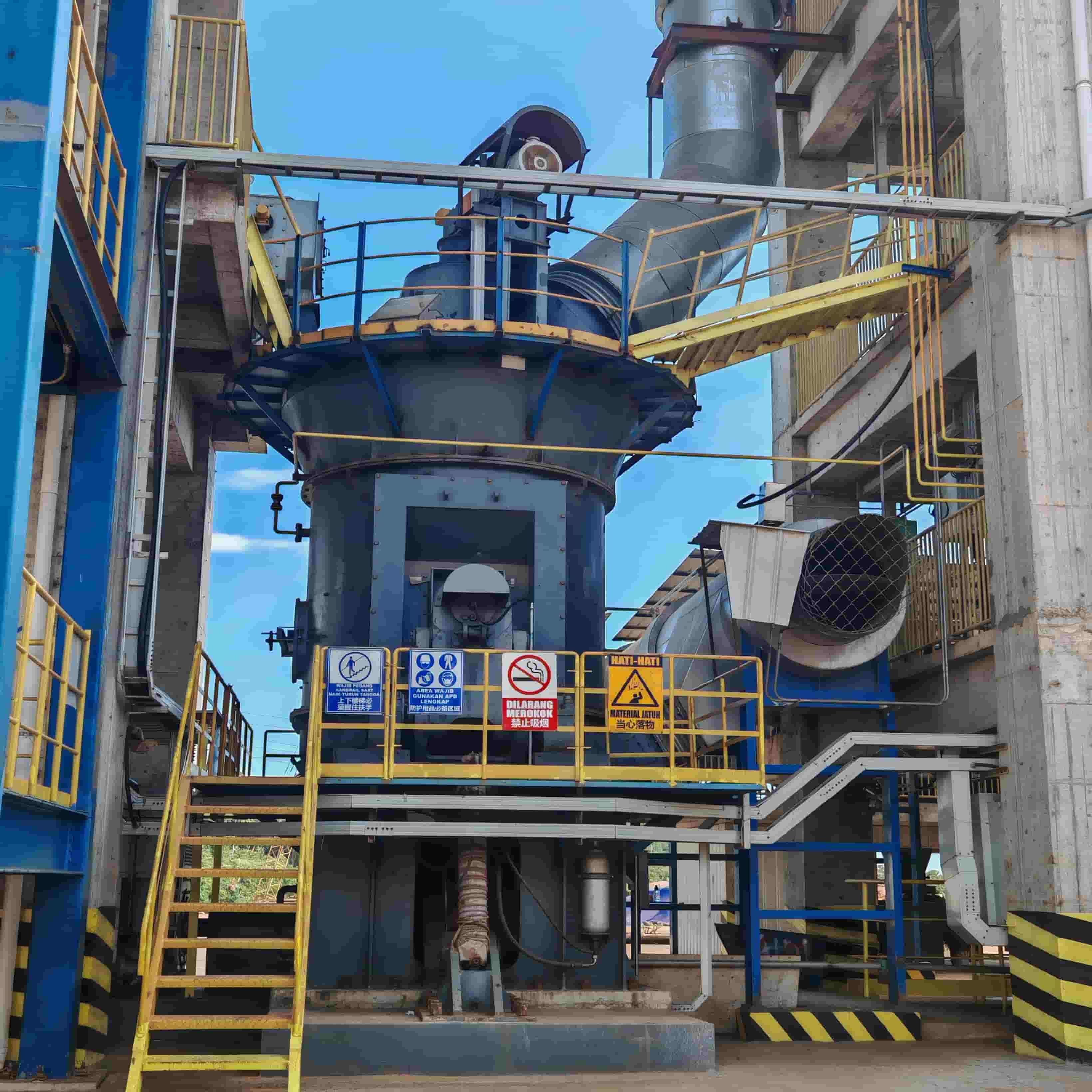
This article analyzes the core advantages of the HVM vertical roller mill in calcite processing, and explains how precise technical selection helps enterprises stand out in fierce market competition.
Why is the HVM Vertical Roller Mill an Ideal Choice for Calcite Processing?
Compared with traditional grinding equipment, heavy-duty vertical roller mills deliver revolutionary technological upgrades in calcite processing, with prominent advantages reflected in the following core aspects:
1. Energy Saving and Consumption Reduction, Solving Core Cost Pain Points
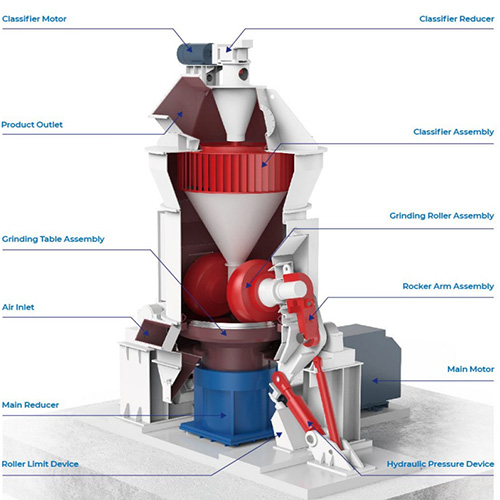
The HVM vertical roller mill adopts the bed grinding principle. Materials are crushed and ground through extrusion between the grinding disc and grinding rollers, achieving a far higher energy utilization rate than the impact grinding mode of ball mills. Mass field applications prove that the system power consumption for calcite processing by vertical roller mills can be reduced by 30%-50% compared with traditional ball mills. Against the backdrop of continuously rising energy costs, this advantage directly translates into substantial profit margins for enterprises.
2. Precise Powder Control to Meet High-end Market Requirements
Equipped with a high-efficiency dynamic classifier, the HVM vertical roller mill enables real-time adjustment of finished product fineness and achieves a narrow particle size distribution. Whether producing 325-mesh conventional filler powder or high-value-added 800-mesh and 1250-mesh ultrafine powder, operators can realize accurate fineness control simply by adjusting the classifier speed. This ensures stable product indicators and fully meets the stringent standards of high-end customers.
3. Integrated Process Design to Simplify Production Line Layout
A single HVM vertical roller mill integrates five core functions: crushing, grinding, classifying, drying and conveying. For calcite raw materials with a certain moisture content, drying and grinding can be completed synchronously inside the mill. This greatly simplifies the production process, reduces investment in auxiliary equipment, and saves plant floor space.
Tap into High-value Calcite Markets
The selection of appropriate processing equipment directly determines your access to high-margin end markets.
- Conventional Filler Market (200–400 mesh): Featuring high output and steady demand, this segment forms the fundamental market for vertical roller mills. For instance, the HVM1900 vertical mill boasts a production capacity of 23 to 68 tons per hour, fully capable of supporting large-scale industrial production.
- High-value-added Ultrafine Powder Market (600–2500 mesh): This is the core driver of profit growth. Ultrafine calcium carbonate powder commands premium prices for applications in high-end coatings, sealants, automotive paints and other sectors. To cater to such demands, professional ultrafine vertical mills (the HVM series, for example) can control product particle size at D97 = 5–30 microns, empowering manufacturers to capture greater share in high-end markets.
Key Considerations for Equipment Selection
For domestic machinery manufacturers striving to make breakthroughs in overseas markets, merely supplying equipment parameters is insufficient. It is equally critical to demonstrate in-depth understanding of application processes. The following factors should be prioritized when proposing solutions to clients:
Raw Material Compatibility
Calcite features low hardness (Mohs hardness 3), yet finished products demand stringent whiteness and purity standards. The equipment must adopt a low-wear structural design to prevent product contamination caused by abrasion of grinding rollers and grinding discs during milling.
Intelligent Control System
Modern vertical roller mills shall be equipped with PLC automatic control systems to support one-click start-stop, remote monitoring and fault diagnosis. This functionality drastically cuts labor costs and technical barriers for overseas customers.
Environmental Compliance
Negative-pressure operation and high-efficiency pulse dust collectors are standard configurations. Ensuring dust emission concentration below 20 mg/Nm³ is a prerequisite to comply with increasingly stringent global environmental regulations.
In the non-metallic mineral processing industry, shifting focus from "selling standalone equipment" to "providing comprehensive processing solutions" holds the key to capturing overseas markets. When it comes to calcite grinding, vertical roller mills stand out as the optimal solution to help clients cut costs, boost efficiency and upgrade product quality, thanks to their three core strengths: outstanding energy efficiency, precise particle size control and highly integrated system design.
If you wish to learn more detailed information about the HVM Vertical Roller Mill, please click:www.hengchengmill.com or Contact Us!